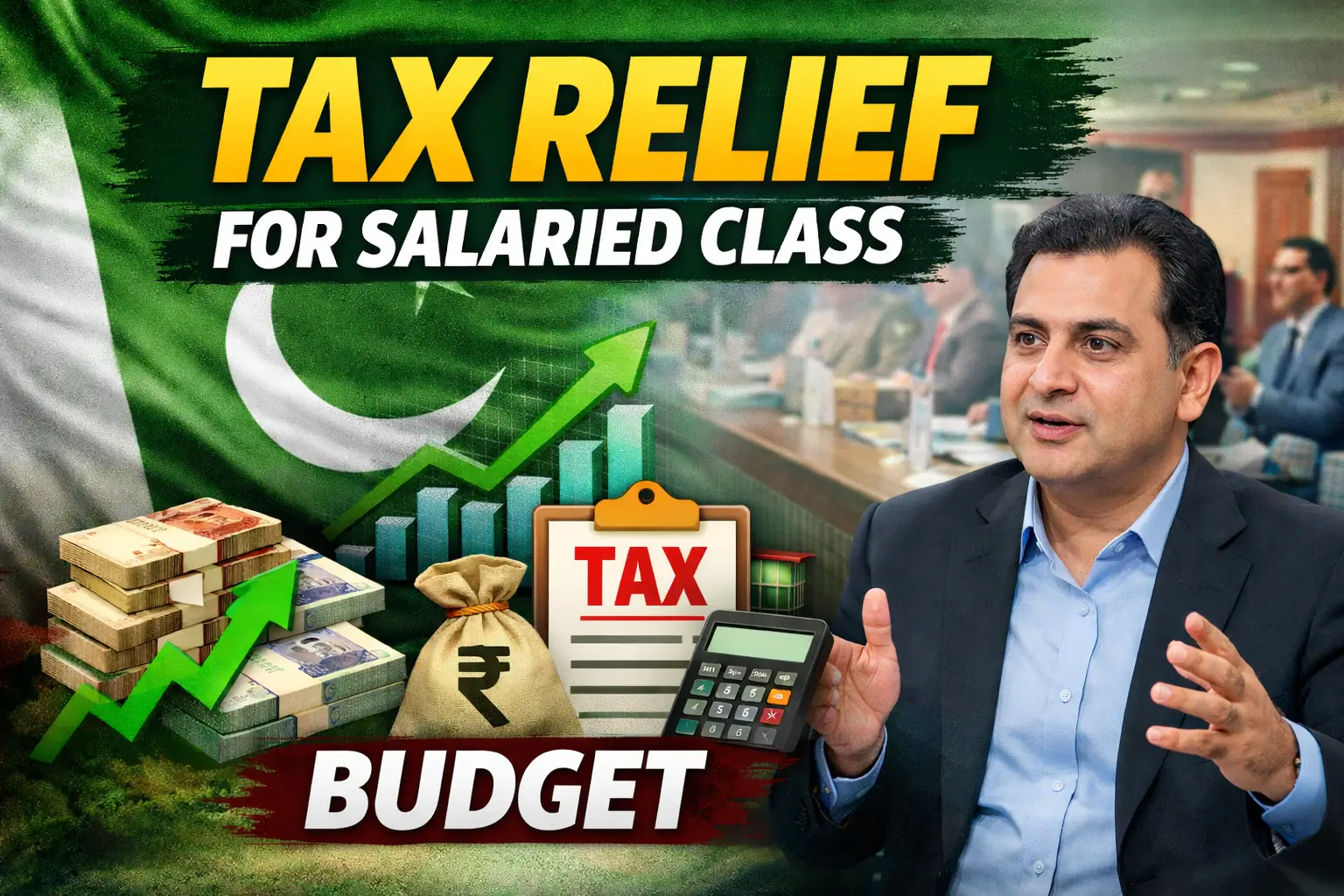
Govt Promises Targeted Tax Relief for Salaried Class 2026 Update. Is tax relief finally coming for Pakistan’s salaried class in 2026?
The federal government says yes. Officials confirm targeted relief in the next budget, alongside stronger growth and easing inflation.

This article explains what the announcement really means for salaried individuals, registered businesses, and the wider economy.
Govt Signals Targeted Tax Relief in Budget 2026
The federal government has announced plans to ease the tax burden on salaried individuals and compliant businesses in the upcoming budget. The assurance came from Khurram Shahzad, Adviser to the Finance Minister, during a televised interview.
According to him, the relief will be targeted, not blanket-based. This means the focus will remain on people already part of the documented economy.
Why “Targeted” Relief Matters
Targeted relief signals a shift in tax policy. Instead of broad tax cuts, the government aims to reward compliance.
This approach helps in three ways:
- Reduces pressure on fixed-income earners
- Encourages documentation of income
- Protects revenue collection targets
For salaried individuals facing shrinking purchasing power, even small tax adjustments can bring meaningful relief.
Relief for Salaried Class and Registered Businesses
The government has clarified that relief will not be limited to individuals alone. Registered and tax-compliant businesses are also part of the plan.

Expected Areas of Relief
While exact figures will be announced in the budget, officials hinted at several focus areas.
| Relief Area | Expected Impact |
|---|---|
| Income tax slabs | Lower burden on middle-income earners |
| Energy tariffs | Reduced operational and household costs |
| Tax rate rationalisation | Fairer tax distribution |
| Compliance incentives | Encouragement for registered taxpayers |
This policy direction shows the government wants to support those who already pay taxes instead of expanding pressure on the same group.
Energy Tariff Cuts and Tax Rationalisation
Alongside tax relief, work is underway to reduce energy tariffs. High electricity and gas costs have been a major concern for households and businesses.
Lower energy prices can:
- Improve household affordability
- Reduce business costs
- Support export competitiveness
Tax rationalisation is also part of the reform package. This includes reviewing existing rates to make them simpler and more predictable.
Pakistan’s Growth Outlook Beats Global Estimates
The finance adviser expressed confidence that Pakistan’s economic growth will exceed global projections this year.
GDP Growth Projections
According to official estimates:

- Up to 4% GDP growth in the current fiscal year
- Around 5% growth expected next year
These figures are higher than projections made by global institutions such as the International Monetary Fund.
If achieved, this growth can create fiscal space for sustained relief in future budgets.
Remittances to Cross $41 Billion
Remittances continue to play a key role in Pakistan’s economy. The government expects overseas Pakistanis to send more than $41 billion this year.
Why Remittances Matter
Strong remittance inflows:
- Support foreign exchange reserves
- Stabilise the external account
- Reduce pressure on the rupee
This cushion allows the government to manage imports and debt obligations more smoothly.
IMF Engagement and Economic Stability
Preparatory work is ongoing for the next IMF economic review. Pakistan has often returned to the IMF due to structural weaknesses.
This time, officials claim the approach is different.
A Shift Toward Sustainability
According to the finance adviser:
- Policies are cautious and long-term
- Focus is on avoiding repeated balance-of-payments crises
- Structural reforms are being prioritised
This signals alignment with IMF benchmarks while trying to protect domestic economic stability.
Privatisation of Loss-Making State-Owned Enterprises
Another major reform area is the privatisation of state-owned enterprises.
What Is Planned
- 24 state-owned entities identified
- Heavy burden on public finances
- Privatisation aligned with IMF benchmarks
These enterprises have drained resources for years. Their privatisation could reduce fiscal pressure and improve efficiency.
Inflation Drops Sharply, Household Pressure Eases
Inflation has been one of the biggest challenges for Pakistani households. The government claims a major turnaround.
Inflation Trend
- Earlier levels: 25–30%
- Current level: Around 5%
This decline offers breathing space for consumers and improves real incomes.
The broader goal, officials say, is not just controlling prices but increasing earning capacity through stability and growth.

Exports and Long-Term Economic Growth
Greater economic stability is expected to:
- Boost exports
- Improve investor confidence
- Strengthen long-term growth
Lower energy costs, controlled inflation, and better tax policies all contribute to this objective.
Pakistan’s Tax Collection Reality Check
In a separate post on X, the finance adviser highlighted structural issues in tax collection.
Federal vs Provincial Tax Performance
| Category | Amount | Share of GDP |
|---|---|---|
| Federal taxes collected | Rs13 trillion | 11.3% |
| Global benchmark | — | ~18% |
| Target by June 2028 | — | 15% |
| Provincial taxes | Rs979 billion | 0.85% |
Provinces are expected to contribute at least 3% of GDP, but current figures fall far short.
Why Provinces Must Step Up
To meet national targets, provincial tax revenues must triple by 2028.
The adviser stressed that:
- The tax base exists
- The real issue is weak revenue generation
- Better enforcement is needed
Without provincial contribution, pressure remains on federal taxpayers, especially the salaried class.

What This Means for Salaried Individuals in 2026
For salaried taxpayers, the message is cautiously positive.
Key Takeaways
- Targeted relief is officially planned
- Focus remains on compliant taxpayers
- Inflation easing improves purchasing power
- Structural reforms aim to reduce future tax pressure
However, the final impact depends on budget execution and follow-through.
FAQs
Will salaried class get tax relief in Budget 2026?
Yes. The government has confirmed targeted tax relief for salaried individuals in the upcoming budget.
Is the relief for everyone or only specific groups?
The relief will be targeted, mainly benefiting compliant taxpayers and registered income earners.
What GDP growth is expected for Pakistan?
Officials project up to 4% growth this year and around 5% next year.
How does IMF involvement affect tax policy?
IMF benchmarks encourage structural reforms, but the government says relief will continue for documented taxpayers.
Will inflation stay low in 2026?
The government claims inflation has dropped to around 5% and expects stability to continue.
Conclusion
The government’s promise of targeted tax relief for the salaried class in 2026 offers cautious optimism. Combined with easing inflation, higher growth projections, and structural reforms, the policy direction looks supportive.