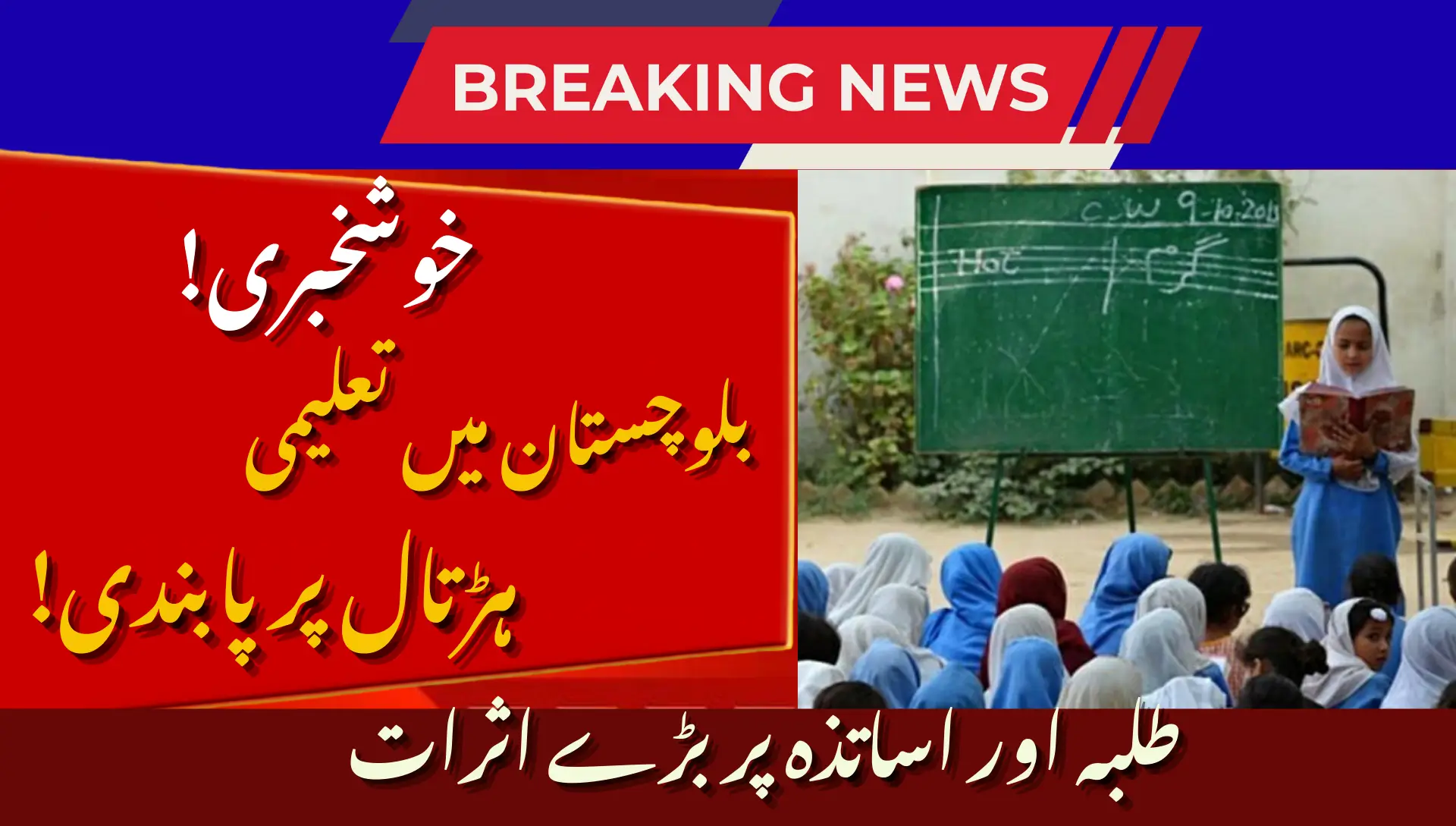
Education Sector Strike Ban in Balochistan. The education sector strike ban in Balochistan has raised important questions for teachers, parents, and institutions across the province. In 2026, the provincial government reinforced strict legal measures to ensure uninterrupted academic activities. This article explains what the ban means, why it was imposed, and how it impacts public and private educational institutions.

Education Sector Strike Ban in Balochistan: Overview
The Balochistan government has officially banned all strikes and illegal work stoppages in the education sector under the Balochistan Special Education Services Act 2019. This decision applies to:
- Public schools
- Private schools
- Colleges
- Educational staff and teaching faculty
The ban aims to protect students’ right to education and ensure academic continuity throughout the province.
Why the Balochistan Government Banned Strikes in Education
Ensuring Uninterrupted Learning
Frequent strikes by teachers and education staff have historically disrupted:
- Academic calendars
- Board examinations
- Student performance
- Admission schedules
The government believes uninterrupted learning is essential for human capital development and social stability.

Public Interest and Legal Responsibility
Education is categorized as an essential public service. Under Section 6 of the Act, the provincial government is legally empowered to restrict strikes that may harm public welfare.
Key Provisions of the Balochistan Special Education Services Act 2019
| Provision | Details |
|---|---|
| Law Name | Balochistan Special Education Services Act 2019 |
| Section Applied | Section 6 |
| Strike Ban Duration | 6 Months |
| Institutions Covered | Public & Private |
| Enforcement | Immediate |
| Penalties | Legal action against violators |
This legislation provides the legal framework to control unlawful protests in the education sector.
Immediate Implementation Across the Province
Officials from the School Education Department Balochistan confirmed that the order:
- Took immediate effect
- Applies to schools and colleges
- Covers teachers, administrators, and staff
- Includes both urban and rural institutions
Authorities have warned that no leniency will be shown to violators.

What Actions Are Considered Illegal Under the Ban?
Illegal Activities Include:
- Teacher strikes
- Sit-ins during school hours
- Work stoppages
- Organized protests disrupting classes
Allowed Activities:
- Peaceful dialogue with authorities
- Legal representation through unions
- Policy discussions outside academic hours
This distinction ensures rights are protected without harming students.
Legal Consequences for Violating the Strike Ban
The government has announced strict enforcement mechanisms, including:
- Disciplinary action against teachers
- Fines for institutions
- Suspension or termination
- Legal proceedings under provincial law
Educational institutions found supporting strikes may also face registration review.
Impact on Teachers and Education Staff
Concerns Raised by Teachers
Many educators argue that strike bans may limit their ability to demand:

- Fair salaries
- Timely promotions
- Improved working conditions
However, the government insists alternative grievance mechanisms remain available.
Government’s Response
Authorities claim that:
- Teacher welfare remains a priority
- Strikes are not the only solution
- Dialogue platforms will be strengthened
Impact on Students and Parents
From a student perspective, the decision offers:
- Stable academic schedules
- Timely exams and results
- Reduced learning gaps
Parents largely support the move, emphasizing the need for educational consistency, especially in underdeveloped regions of Balochistan.
Public vs Private Institutions: Is There Any Difference?
No. The strike ban applies equally to:
- Government schools
- Private schools
- Colleges
- Coaching centers (where applicable)
This ensures uniform enforcement and prevents loopholes.
Comparison With Other Provinces
| Province | Education Strike Policy |
|---|---|
| Balochistan | Complete ban under 2019 Act |
| Punjab | Restricted protests, conditional |
| Sindh | Case-by-case enforcement |
| KPK | Negotiated strike limitations |
Balochistan currently has one of the strictest frameworks in Pakistan.
FAQs
Is the education sector strike ban permanent in Balochistan?
No, the current ban is imposed for six months, but it may be extended if required.

Does the strike ban apply to private schools?
Yes, the ban applies to both public and private educational institutions.
Can teachers protest legally under the new rules?
Teachers can engage in peaceful dialogue and legal processes, but strikes during academic hours are illegal.
What law enforces the strike ban?
The ban is enforced under the Balochistan Special Education Services Act 2019.
Why did the government impose the strike ban?
To ensure uninterrupted education, protect student interests, and maintain academic continuity.
Conclusion
The education sector strike ban in Balochistan reflects the government’s commitment to safeguarding academic continuity and public interest. While the decision ensures stability for students, its long-term success depends on constructive engagement with educators.